

important midway sinking
A serious warning for all San Diegans: flooding, sea-level rise and the future of Midway Rising
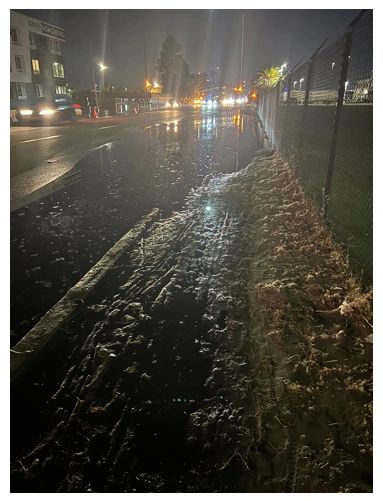
These pictures should alarm every single person living in San Diego.
Look at these photographs showing streets flooded with water near residential buildings in the Point Loma and Midway area. Imagine living here, trying to get to work, getting your children to school, or needing emergency services while your street is underwater.
Now ask yourself one very serious question: Why are our elected officials pushing forward with the massive Midway Rising development when flooding and sea-level rise are already documented concerns in this area?
This is not some imaginary threat decades into the future.
The City of San Diego has acknowledged that low-lying areas around Midway are vulnerable to flooding during high tides and storms. Its own climate planning information warns that San Diego could experience another 3.6 to 7 feet of sea-level rise by 2100.
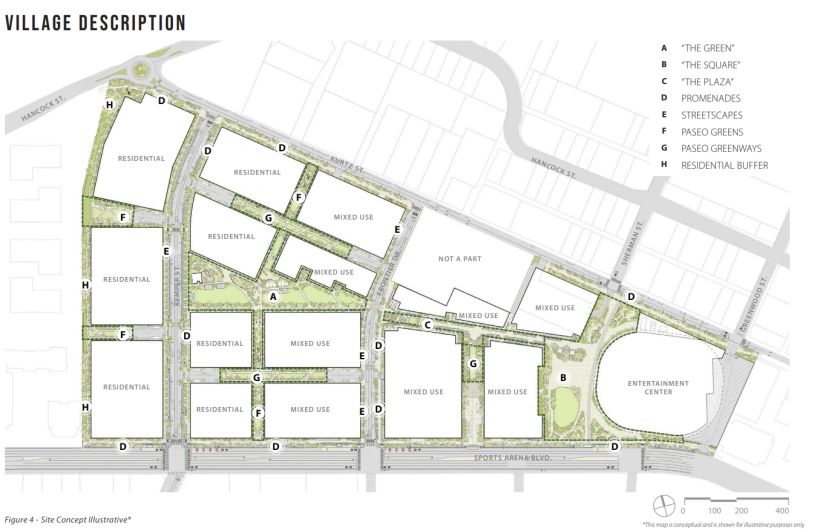
Yet city leaders are moving forward with plans for more than 4,200 housing units, a massive entertainment arena, businesses, and additional infrastructure on the Sports Arena property.
What happens when the water rises? Who protects these future residents? Who pays for the infrastructure, drainage improvements, emergency response, and long-term maintenance?
We understand that San Diego needs housing. But we also need responsible planning that protects the people who will live there.
The project's environmental review includes proposed flood protections, but the public deserves clear answers about whether those measures will remain effective over the coming decades.
Before making decisions that will affect generations of San Diegans, our city leaders owe residents answers:
How will Midway Rising withstand rising sea levels, extreme tides, and major storms?
What happens when existing drainage systems and flood-control pumps cannot keep up?
How will emergency vehicles access the area during major flooding?
Who will ultimately pay for future flood protection and infrastructure improvements?
Are neighboring communities being adequately protected from the project's long-term impacts?
This is not just a Point Loma or Midway problem. This is a San Diego problem.
We cannot afford to ignore what is happening in our coastal communities. These photographs are a powerful reminder of why flooding deserves serious public attention, even as the precise cause of this particular event is investigated.
San Diego deserves transparency, accountability, sound science, and responsible decisions about its future.
A beautiful development means nothing if the people living there are not adequately protected.
We encourage every San Diegan to examine the facts, ask difficult questions, and demand clear answers before the City Council makes its next decision on Midway Rising.
Please Write an Email to all of our current leadership with your concerns:
Todd Gloriamayortoddgloria@sandiego.govJoe LaCavajoelacava@sandiego.govJennifer Campbelljennifercampbell@sandiego.govStephen Whitburnstephenwhitburn@sandiego.govHenry Foster IIIhenryfoster@sandiego.govMarni von Wilpertmarnivonwilpert@sandiego.govKent Leekentlee@sandiego.govRaul Campilloraulcampillo@sandiego.govVivian Morenovivianmoreno@sandiego.govSean Elo-Riveraseanelorivera@sandiego.gov
Our communities deserve to be heard. Our safety and our future matter.
San Diego United Communities
For the people, by the people of San Diego.
www.sandiegounitedcommunities.com
Please share these photographs and this message with your neighbors.
TAKE ACTION AGAINST MIDWAY RISING
bACKGROUND
Why Midway Rising Feels Shady to Many San Diegans
For the people who live, work, and drive through the Midway District, Midway Rising is more than a glossy rendering. It could mean years of construction, heavier traffic, more noise, crowded streets, and major changes to publicly owned land.
The proposal includes more than 4,250 homes, a 16,000-seat arena, shops, restaurants, and thousands of new residents. Construction could continue through 2035. The City’s own environmental findings identify significant impacts involving commercial traffic, operational noise, and historical resources that cannot be fully eliminated. The report also raises concerns involving construction noise, hazardous materials, and potential risks to future occupants that would require mitigation. Read the City’s environmental findings.
Then there is the project’s troubled legal history. Courts sided with challengers who argued that the City failed to conduct the necessary environmental review before removing the area’s voter-approved height limit. Even after the California Supreme Court declined to hear the City’s appeal, officials continued exploring alternative legal and legislative paths to move the project forward. Read more about the legal controversy.
Residents are not against affordable housing or responsible redevelopment. They are against backroom decisions, unanswered financing questions, inadequate infrastructure, and environmental consequences being pushed aside to benefit a massive private development.
Midway Rising may promise a beautiful new neighborhood—but San Diegans deserve to know who will pay, who will profit, and who will be left dealing with the consequences.
This is public land. The public deserves complete transparency—and a real voice before it is too late..

Why fIGHT?
San Diego United Communities opposes the current Midway Rising proposal because a project of this size should not be fast-tracked without full transparency and public oversight. Serious concerns remain about traffic, infrastructure, environmental impacts, public safety, financing, and the long-term use of valuable public land. San Diegans deserve clear answers before an irreversible decision is made. .
take action
The City Council must not fast-track the massive Midway Rising project. Serious questions remain about traffic, public safety, environmental impacts, infrastructure, financing, and the project’s long-term consequences.
Please email all nine City Councilmembers today and ask them to:
- Vote NO on the current Midway Rising proposal.
- Require full committee review and public oversight.
- Demand clear answers before making an irreversible decision involving public land.
Councilmembers Henry Foster III and Kent Lee are seeking reelection. Voters will be watching and will remember how every Councilmember votes.
Copy and send this message:
Dear Councilmembers,
I urge you to vote NO on the current Midway Rising proposal. A project of this size and importance must not be fast-tracked.
Please require a complete and transparent review of its environmental, traffic, infrastructure, financial, and public-safety impacts. Protecting San Diego residents must come before the interests of developers.
Thank you.
Send your email to:
JoeLaCava@sandiego.gov;
JenniferCampbell@sandiego.gov;
StephenWhitburn@sandiego.gov;
HenryFoster@sandiego.gov;
MarnivonWilpert@sandiego.gov;
KentLee@sandiego.gov;
RaulCampillo@sandiego.gov;
VivianMoreno@sandiego.gov;
SeanEloRivera@sandiego.gov
Please act today and encourage your friends and neighbors to do the same.
San Diego United Communities
For the people, by the people of San Diego.
MIDWAY SINKING

CHECK OUT OUR OFFICIAL MIDWAY RISING TAB UP TOP ON OUR WEBSITE
Ralph Teyssier: ‘Is It Midway Rising or Is It Midway Sinking?’
Eric Law has discussed the legislative promise of affordable housing, and Patty Ducey-Brooks has addressed the environmental concerns around Midway Rising and Senate Bill 958. I’d like to spend just a couple of minutes discussing the engineering realities of delivering affordable housing.
As a structural engineer, I support affordable housing. But we also need to recognize that SB 958 extends well beyond the Midway Rising project. If enacted, it could influence how future coastal developments are evaluated throughout California. That makes it all the more important that we fully understand the engineering realities, geological conditions, and economic consequences before establishing a statewide precedent. Political will alone does not create affordable housing. Engineering, geology, construction, and economics all play important roles. Nor should we assume that simply allowing taller buildings automatically results in more affordable housing.
In fact, when increased building height is removed from meaningful CEQA (California Environmental Quality Act) review, it becomes more difficult to fully evaluate the engineering and economic consequences associated with that increased height. In that sense, it works against one of CEQA’s fundamental purposes—providing informed decision-making.
The project’s own geotechnical reports describe this site as a former estuary with artificial fill, shallow groundwater, and a high potential for liquefaction. They identify strong ground motion, liquefaction, seismic compaction, and tsunami hazards that require engineering mitigation.
Those are not overly generalized conclusions— they are definitive specifics directly from the project’s own geotechnical engineers. None of those challenges make the site unbuildable. California engineers successfully design projects on difficult sites every day. But difficult sites are expensive to develop.
Every engineering solution is achievable—but every engineering solution also has a cost.
Ground improvement, deep foundations, settlement mitigation, flood protection, utility improvements, and long-term resilience all add engineering complexity, and every one of these items will be required at this site. All of this engineering complexity adds significant construction cost. Those costs do not disappear simply because the project is intended to include affordable housing.
The original geotechnical studies evaluated an earlier concept of approximately eight to twelve stories. Today, substantially taller buildings have been discussed. As buildings become taller, structural demands, foundation demands, and construction costs generally increase as well.
That leads to a very simple question: If the primary justification for eliminating the coastal height limit is to create affordable housing, has anyone demonstrated that this is the most economical engineering solution for delivering that affordable housing?
While these engineering realities are specific to the Midway Rising site, the broader policy implications are not. SB 958 would establish a framework that could influence future development decisions on other complex coastal sites across California—many of which may present similar geotechnical, environmental, infrastructure, and resiliency challenges.
As engineers, we don’t begin by asking how tall we can build. We begin by understanding where we’re building, what the site requires, and what those requirements will ultimately cost.
Public policy should follow that same disciplined approach. Before establishing a statewide precedent that could shape future coastal development throughout California, we should first understand the engineering realities, environmental constraints, infrastructure capacity, and long-term consequences of those decisions.
Good engineering— and good public policy— don’t begin with what we hope to build. They begin with understanding where we are building.